 DATE: Wednesday, September 30, 2026 at 1PM ET
SPEAKER: Karen A. Gordon, PhD, CCC-A, Reg CASLPO, Professor, Dept. of Otolaryngology-HNS, University of Toronto, Director of Research in Archie’s Cochlear Implant Laboratory
Abstract:
Many children with hearing loss experience asymmetries in function between their ears and poor balance. This can present at birth or at older ages with progressive deterioration in either or both ears which is why hearing screening needs to identify infants with hearing loss as well as infants at risk for later hearing loss. Interventions provided to support hearing and balance in children should reduce these asymmetries to provide optimal hearing in both ears and to restore important binaural functions such as sound localization and speech understanding in noise. These efforts need to be realized quickly to restore hearing in both ears during early sensitive developmental periods but have been challenged by unilateral device use (e.g. unilateral cochlear implants) and mismatches between inputs from the two separate devices worn in each ear. This has left some children with an “aural preference” for one ear over the other and poor binaural hearing. These findings show that their asymmetric hearing has not been resolved. Effects of such hearing asymmetries on the developing brain suggest that children with asymmetric hearing loss use alternate auditory processes which may underly their listening fatigue and risks for academic delays. Thus, along with our goal of providing bilateral hearing to children without delay, our aim as audiologists should be to better match the inputs to the two ears and promote spatial perception including binaural hearing and balance.
Learning Objectives
- Asymmetric hearing loss is commonly caused by inherited and acquired etiologies in children and often presents with poor balance.
- Early provision of bilateral hearing in children is beneficial but does not restore binaural processing.
- Mismatched inputs between bilateral devices should be identified with future efforts to resolve these continuing sources of asymmetric hearing.
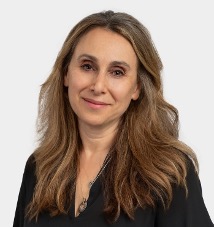
SPEAKER BIO: Karen A. Gordon, PhD, CCC-A, Reg CASLPO, Professor, Dept. of Otolaryngology-HNS, University of Toronto, Director of Research in Archie’s Cochlear Implant Laboratory
Karen Gordon, PhD, is a Professor in the Department of Otolaryngology and a Graduate Faculty Member in the Institute of Medical Science at the University of Toronto. She works at the Hospital for Sick Children in Toronto, Ontario, Canada, as a Senior Scientist in the Research Institute and an Audiologist in the Department of Communication Disorders. She is Director of Research in Archie’s Cochlear Implant Laboratory and holds the Bastable-Potts Health Clinician Scientist Award in Hearing Impairment and Cochlear Americas Chair of Auditory Development. Karen’s collaborative research focuses on auditory development in children who are deaf and use auditory prostheses including cochlear implants. Her work is supported by research funding from the Canadian Institutes of Health Research and the American National Institute of Health along with the Cochlear Americas Chair in Auditory Development and generous donations.